Wooden utensils are reusable kitchen tools made from materials such as maple, beech, bamboo, or olive wood. To reduce the chance that bacteria persist on them, wash them promptly with hot, soapy water, rinse away food residue, and dry them completely before storing. The U.S. Food and Drug Administration (FDA) identifies cleaning and sanitizing as distinct steps in food-contact hygiene, while the U.S. Department of Agriculture (USDA) advises keeping kitchen equipment clean and dry. No single drying time guarantees safety: results depend on the utensil’s condition, the food handled, airflow, humidity, and storage. This guide explains why moisture matters, how to wash and dry wooden tools, how to recognize damage, and what food-safety guidance does—and does not—say about wood.
Reduces Moisture to Limit Bacterial Growth on Wooden Utensils
Proper drying means removing surface water and allowing the utensil to air-dry fully before it is put away. It is a practical hygiene measure, not a substitute for washing or a guarantee that every microorganism has been eliminated. The FDA Food Code treats cleaning as removal of food and other soil; sanitizing, where required, is a separate process intended to reduce microorganisms on food-contact surfaces to specified levels.
Wood is porous and can absorb water, so a utensil may feel dry on the outside while remaining damp in a crack, joint, or deep scratch. The relevant distinction is between clean, intact wood that dries thoroughly and a utensil that stays wet, retains food debris, or has damage that is difficult to clean. Public-health guidance does not establish a universal “safe after X minutes” drying rule for wooden spoons.
Why drying matters
Many bacteria need available moisture to multiply, although the relationship varies by organism, temperature, food residue, and surface. Drying removes water from the utensil’s exposed surfaces and reduces the damp conditions that can support microbial survival or growth. It does not sterilize the utensil, and drying a dirty spoon can leave food residues and microorganisms in place.
The Centers for Disease Control and Prevention (CDC) emphasizes preventing cross-contamination by washing utensils and other food-contact items after use, especially when they have touched raw meat, poultry, seafood, or eggs. Drying is the final part of a careful routine: clean first, then let the utensil dry fully in a clean area.
Wooden utensils and related utensil types
Wooden spoons, spatulas, salad servers, chopsticks, and rolling pins are examples of reusable wood utensils. Bamboo tools are also plant-based and require attention to cleaning and drying, though construction and finish vary. These tools differ from nonporous stainless-steel or many plastic utensils, but material alone does not determine safety: cleanliness, condition, food-contact use, and the ability to wash and dry the item are all relevant.
Applies a Reliable Wash-and-Dry Protocol to Wooden Utensils
A practical home-care protocol removes food promptly, washes the whole utensil, and allows air to circulate around it while it dries. The FDA and USDA provide general food-safety advice for cleaning kitchen equipment; follow the utensil maker’s care instructions as well, especially for tools with glued joints, coatings, or decorative finishes.
Wash promptly after use
Scrape off food, then wash the utensil by hand with hot water and dish soap, using a clean sponge or brush to reach the handle, bowl, edges, and joints. Rinse thoroughly so soap and loosened residue are removed. Prompt washing is particularly important after contact with raw animal foods, sticky sauces, dairy, or other residues that can remain in crevices.
Do not leave wooden utensils soaking in a sink or basin. Prolonged immersion can cause wood to swell, warp, split, or deteriorate, and a crowded sink can expose the utensil to additional food contamination. Avoid assuming that a dishwasher is suitable: high heat, long exposure to water, and drying cycles may damage some wooden tools. Use the manufacturer’s directions.
Air-dry with space and airflow
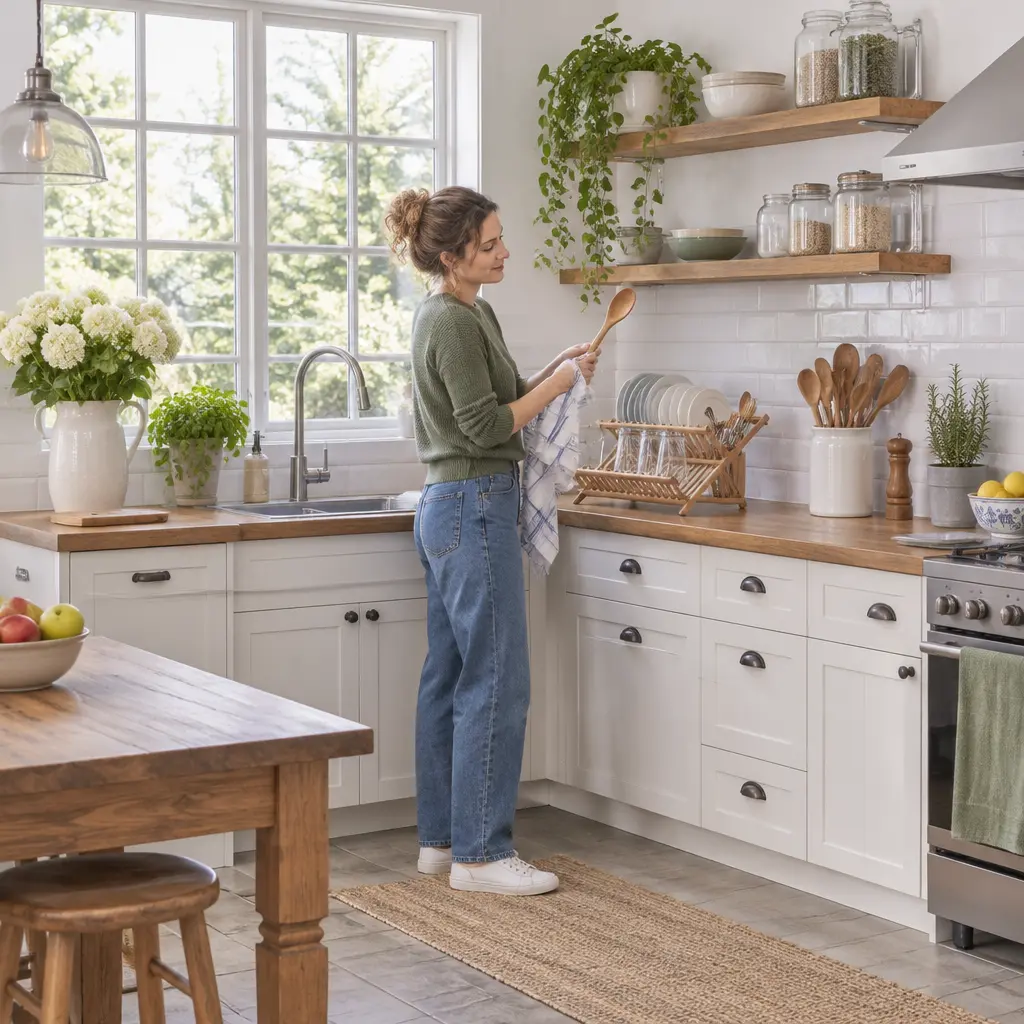
After rinsing, shake off excess water and place the utensil on a clean drying rack, ideally so air can reach both sides. Keep it separated from wet dishes and away from splash zones. If the utensil has a deep bowl, turn it so water does not pool. Do not put it in a drawer, closed container, or utensil crock while it is still damp.
A clean towel may be used to remove visible water, but the utensil should still be allowed to finish air-drying before storage. A clock-based drying estimate is unreliable because humidity, airflow, utensil thickness, and room temperature differ. Check that the entire surface feels dry and inspect joints or crevices before putting it away.
Store dry and prevent cross-contamination
Store fully dry utensils in a clean, dry drawer or holder. Keep clean tools separate from used utensils and from items that may have contacted raw foods. Wash hands and clean nearby work surfaces after handling raw meat or seafood, consistent with CDC food-safety advice.
For commercial food establishments, local rules and the applicable FDA Food Code provisions govern food-contact equipment. A home drying routine should not be presented as a replacement for required commercial washing, rinsing, and sanitizing procedures.
Checks Wear and Damage That Can Undermine Wooden Utensil Hygiene
A utensil’s condition affects whether it can be cleaned effectively. Smooth, intact surfaces are generally easier to wash than deeply cracked, splintered, or badly worn ones. Drying helps protect wood from prolonged dampness, but it cannot repair damage or make an uncleanable surface hygienic.
Inspect for cracks, splinters, and rough grooves
Inspect wooden tools regularly, including the edges of spoon bowls and the handle-to-head junction. Replace a utensil if it develops a crack, splinter, loose joint, deep groove, or other defect that traps food or cannot be cleaned thoroughly. Also discard tools with persistent discoloration or an unusual odor that remains after washing and complete drying; these may signal embedded residue or deterioration, though appearance alone cannot identify bacteria.
Respond to persistent dampness or mold
If a utensil remains damp because it was stored wet, remove it from storage, wash it, rinse it, and dry it fully in an open, clean area. If visible mold, persistent musty odor, deep staining, or structural damage remains, discard the utensil rather than relying on oil, scraping, or surface treatment to make it safe. Food-safety agencies do not provide a validated home method for restoring every mold-affected wooden utensil.
Use oil only for wood care, not disinfection
Some manufacturers recommend occasional food-grade mineral oil or another approved wood conditioner to reduce drying and surface wear. Apply it only to a clean, completely dry utensil and follow the product instructions. Oil is not a sanitizer, does not replace washing, and should not be used to conceal cracks or persistent contamination.
Distinguishes Evidence-Based Guidance from Common Wooden-Utensil Claims
Wood’s porosity often prompts broad claims that it is either inherently unsafe or naturally antibacterial. Neither conclusion is a useful substitute for sound handling. Research on wood and microorganisms varies by wood species, surface condition, organism, moisture, and experimental method; household care should therefore follow established cleaning principles rather than rely on claims that wood disinfects itself.
Wood does not replace cleaning and sanitizing
Some laboratory studies have investigated how bacteria behave on different wood and plastic surfaces, but results under controlled conditions do not establish that a wooden spoon used in a kitchen is self-sanitizing. The FDA’s food-code framework separates cleaning from sanitizing, and the CDC’s home food-safety advice stresses washing utensils and preventing cross-contamination. Treat wood as a reusable food-contact material that must be washed and dried.
There is no universal drying-time statistic
The USDA, FDA, and CDC offer practical food-safety recommendations, but they do not specify a universal number of minutes for air-drying wooden utensils. A claim that every wooden utensil becomes safe after a fixed interval would ignore differences in size, humidity, airflow, and damage. The useful endpoint is complete drying before storage, alongside proper cleaning and inspection.
A simple visual aid for a kitchen routine is a four-step checklist: remove food, wash and rinse, air-dry with airflow, then inspect and store dry. This sequence is more reliable than relying on a timer alone.
Conclusion: Make Complete Drying Part of Wooden Utensil Care
Wooden utensil hygiene depends on the full routine: wash promptly, rinse away residue, air-dry completely, store in a clean and dry place, and replace tools that are cracked, splintered, moldy, or difficult to clean. Drying limits persistent moisture, but it does not disinfect a dirty utensil or compensate for damage. Because no universal drying time is established, use the utensil’s actual condition and dryness as your guide. Review manufacturer instructions and local food-safety guidance, and apply stricter procedures where commercial rules require them.
Sources: U.S. Food and Drug Administration, 2022 Food Code, https://www.fda.gov/food/fda-food-code/food-code-2022; U.S. Department of Agriculture, Food Safety and Inspection Service, Cleanliness Helps Prevent Foodborne Illness, https://www.fsis.usda.gov/food-safety/safe-food-handling-and-preparation/food-safety-basics/cleanliness-helps-prevent-foodborne; Centers for Disease Control and Prevention, Four Steps to Food Safety: Clean, https://www.cdc.gov/food-safety/prevention/index.html