A tart shell is the pastry base that supports a filling, and shaping it evenly is easier with the right tools: a removable-bottom tart pan, a rolling pin, a pastry wheel or knife, and a flat-bottomed measuring cup. These tools help control thickness, form tidy sides, and release the baked crust without breaking it. That matters because pastry shrinks and bakes unevenly when its thickness or temperature varies; standard baking guidance, including King Arthur Baking’s tart-dough techniques, emphasizes chilling and even rolling. Here’s how to choose and use tart-shell tools, from basic pans to precision aids, and how to avoid the common mistakes that turn a neat crust into a lopsided one.
Tart-shell tools shape pastry through support, pressure, and control
Tart-shell tools are implements used to roll, transfer, fit, trim, and bake pastry in a defined shape. The basic set pairs a rolling pin with a tart pan; optional tools such as pastry weights, a pastry wheel, and a tamper make particular steps more consistent. Pastry chef and author Rose Levy Beranbaum describes tart dough as a pastry that must be handled with care to preserve tenderness and shape. In practice, that means choosing tools that distribute pressure evenly and make the dough easier to handle, rather than forcing it into place.
The main tool categories are shaping tools, baking vessels, and supports for blind baking. Each addresses a different part of the job: the rolling pin controls thickness, the pan establishes the shell’s geometry, and weights help keep the base from puffing as it bakes. Together, they form a simple workflow rather than a collection of specialty gadgets.
Rolling pins control dough thickness
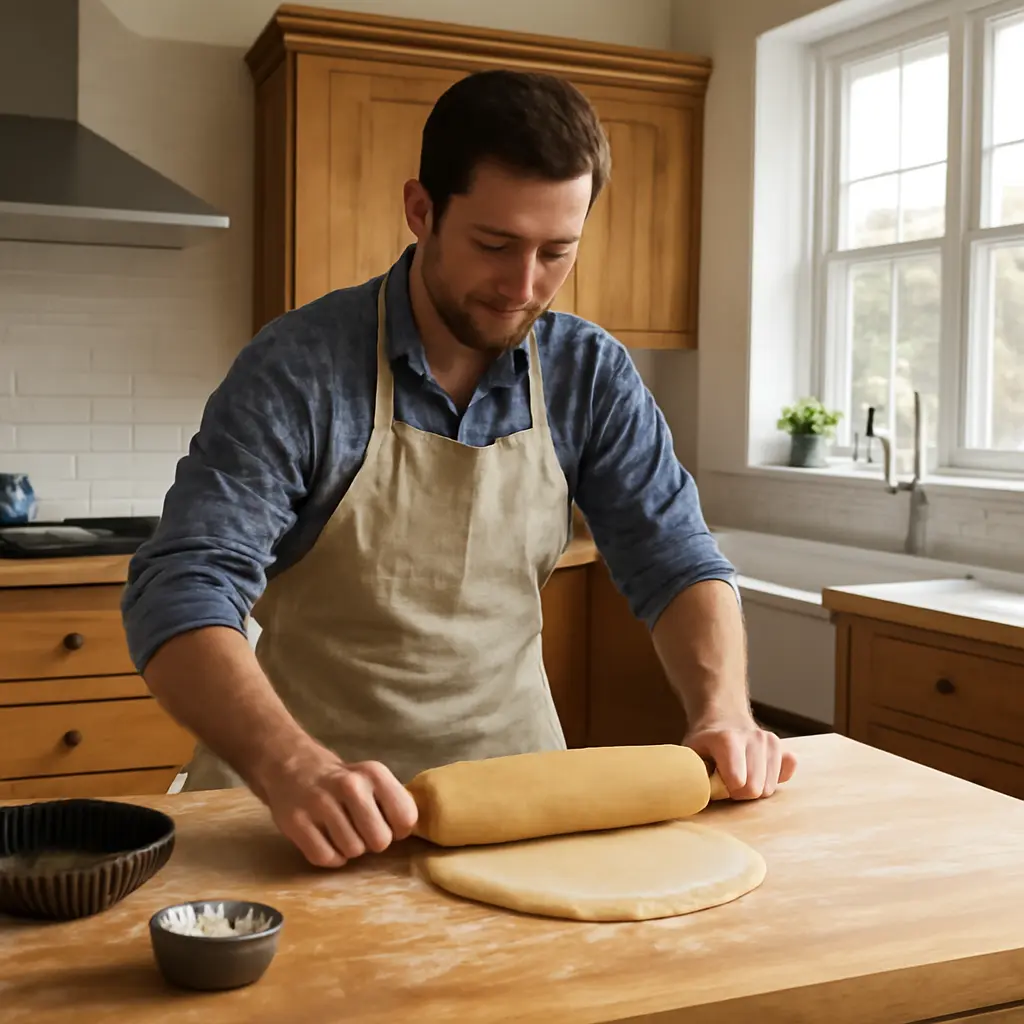
A rolling pin is a cylindrical tool used to flatten dough. A straight French-style pin offers direct control, while a handled pin can feel familiar and stable for beginners. For tart dough, the important feature is not the pin’s material but the ability to roll evenly without pressing hard enough to warm or overwork the pastry.
Many tart recipes call for dough rolled to roughly ⅛ inch, or about 3 millimeters, though the recipe and pan determine the ideal thickness. A thickness guide or rolling-pin rings can help keep the sheet uniform. Even thickness matters because thin spots may brown or crack first while thicker areas remain underbaked.
Tart pans define the shell’s shape
A tart pan is a shallow baking pan, commonly made with fluted sides and a removable base. The removable bottom lets the baked shell lift away from the ring, reducing the need to invert a delicate crust. Metal pans, especially those with a light-colored finish, are widely used because they conduct heat efficiently; dark finishes can brown pastry more quickly, so baking time may need adjustment.
Round pans are the familiar choice, but rectangular and individual tartlet pans serve the same purpose at different scales. A pan’s dimensions affect how much dough is needed and how quickly the crust bakes. Before rolling, check the recipe’s pan size: a mismatch can leave the sides too short or create a shell that is unnecessarily thick.
Pastry wheels and knives trim clean edges
A pastry wheel or sharp paring knife cuts excess dough after the sheet is fitted into the pan. A plain wheel makes a straight edge; a fluted wheel creates a decorative cut. The tool should cut cleanly rather than drag the dough, which can stretch the sides and contribute to shrinkage during baking.
Trim only after gently pressing the dough into the corners and flutes. Leaving a slight overhang until the shell has chilled can help compensate for settling, but avoid pulling the dough taut. A relaxed fit is more likely to hold its shape in the oven.
Tart-shell tools improve fit when used in a careful sequence
A good tool cannot replace temperature control and careful handling. The U.S. Department of Agriculture’s Food Safety and Inspection Service advises keeping perishable foods at safe temperatures; for pastry work, the parallel practical concern is keeping butter-based dough cool enough to handle. If the dough becomes soft or sticky, pause and chill it rather than adding excess flour, which can toughen the crust.
A bench scraper helps transfer fragile dough
A bench scraper is a flat, rectangular blade used to lift dough, gather scraps, and clean a work surface. After rolling, slide the scraper beneath the pastry to loosen it before lifting or folding it over the rolling pin. This reduces the risk of tearing a large sheet while moving it to the pan.
If a tear does occur, patch it with a small piece of dough and press the seam gently. Avoid stretching the sheet to cover the pan; stretched dough tends to pull back as it bakes. Chill the lined pan before baking so the pastry can firm up and maintain its shape.
A flat-bottomed cup or tamper presses dough into corners
A tart tamper is a small tool designed to press dough evenly into a pan. A flat-bottomed measuring cup can perform a similar task, especially for press-in crusts. Use light, even pressure to seat the dough against the base and sides; pressing too firmly can compress the pastry and create a dense texture.
For rolled dough, fingers are often better for fitting the sides into flutes, while a tamper can help level the base. The distinction is useful: rolled pastry needs careful placement, whereas crumb crusts are typically pressed into the pan as a uniform layer.
Pastry weights support blind baking
Blind baking means baking a tart shell before adding its filling. Pastry weights—ceramic beads, metal chains, or dry beans reserved for baking—hold the dough down and help limit bubbling and slumping. The common method is to line the chilled shell with parchment, fill it with weights, and bake according to the recipe; weights are removed near the end if the base needs further browning.
Weights do not eliminate the need to chill the shell or follow the recipe’s temperature. King Arthur Baking recommends docking some pastry bases by pricking them with a fork, but whether to dock depends on the crust and filling. For a shell that must stay flat, use the method specified by the recipe rather than combining techniques automatically.
Tart-shell tools prevent common shaping and baking problems
Uneven edges, cracked pastry, and shrinking sides often come from a combination of dough temperature, handling, and pan fit. Matching each problem to the right tool makes troubleshooting more systematic: a scraper supports transfer, a thickness guide improves rolling, and weights help stabilize the base during blind baking.
For shrinking sides, chill the lined pan
Shrinking occurs when stretched or warm dough contracts in the oven. Fit the pastry into the pan without pulling it, trim it cleanly, and chill the lined pan before baking. A removable-bottom pan makes the finished shell easier to unmold, but it does not prevent shrinkage by itself.
For cracks, patch rather than stretch
Cracks can form when dough is too cold to bend, too dry, or handled roughly. Let very firm dough sit briefly until pliable, then patch small breaks with scraps. A bench scraper helps lift and reposition the dough without tugging it, while a rolling pin used with measured pressure helps avoid thin, fragile areas.
For uneven browning, check pan material and thickness
A dark pan may brown pastry faster than a light-colored one, and a thin base can cook sooner than thick sides. Roll to a consistent thickness and rotate the pan only if the recipe or oven’s hot spots make it necessary. For a visual checklist, imagine a simple diagram showing a rolling pin and thickness guides, dough fitted into a fluted tart ring, and parchment with weights covering the base during blind baking.
Conclusion: choose tart-shell tools for the job
Tart-shell tools make shaping more reliable by controlling dough thickness, supporting a clean transfer, defining the shell’s form, and stabilizing pastry during blind baking. A removable-bottom pan, rolling pin, and scraper cover the essentials; a pastry wheel, tamper, thickness guides, and weights add convenience for specific tasks. Start with the recipe’s pan size and method, keep the dough cool, and use gentle pressure instead of stretching. For further guidance, compare trusted baking references such as King Arthur Baking and Rose Levy Beranbaum’s pastry instructions before trying a new crust style.
Sources: King Arthur Baking, “Tart Crust,” https://www.kingarthurbaking.com/recipes/tart-crust-recipe; Rose Levy Beranbaum, The Pie and Pastry Bible, Scribner, 1998; U.S. Department of Agriculture, Food Safety and Inspection Service, “Keep Food Safe! Food Safety Basics,” https://www.fsis.usda.gov/food-safety/safe-food-handling-and-preparation/food-safety-basics/keep-food-safe-food-safety-basics.