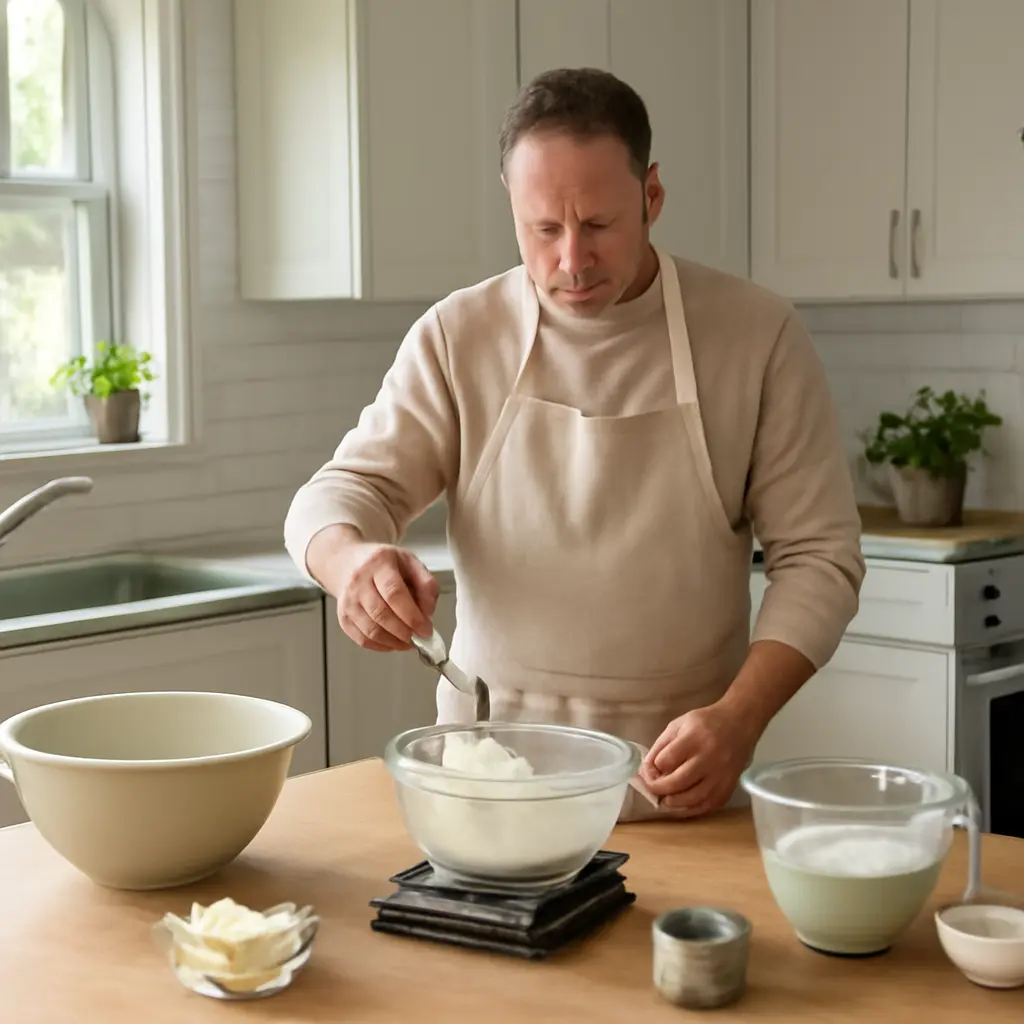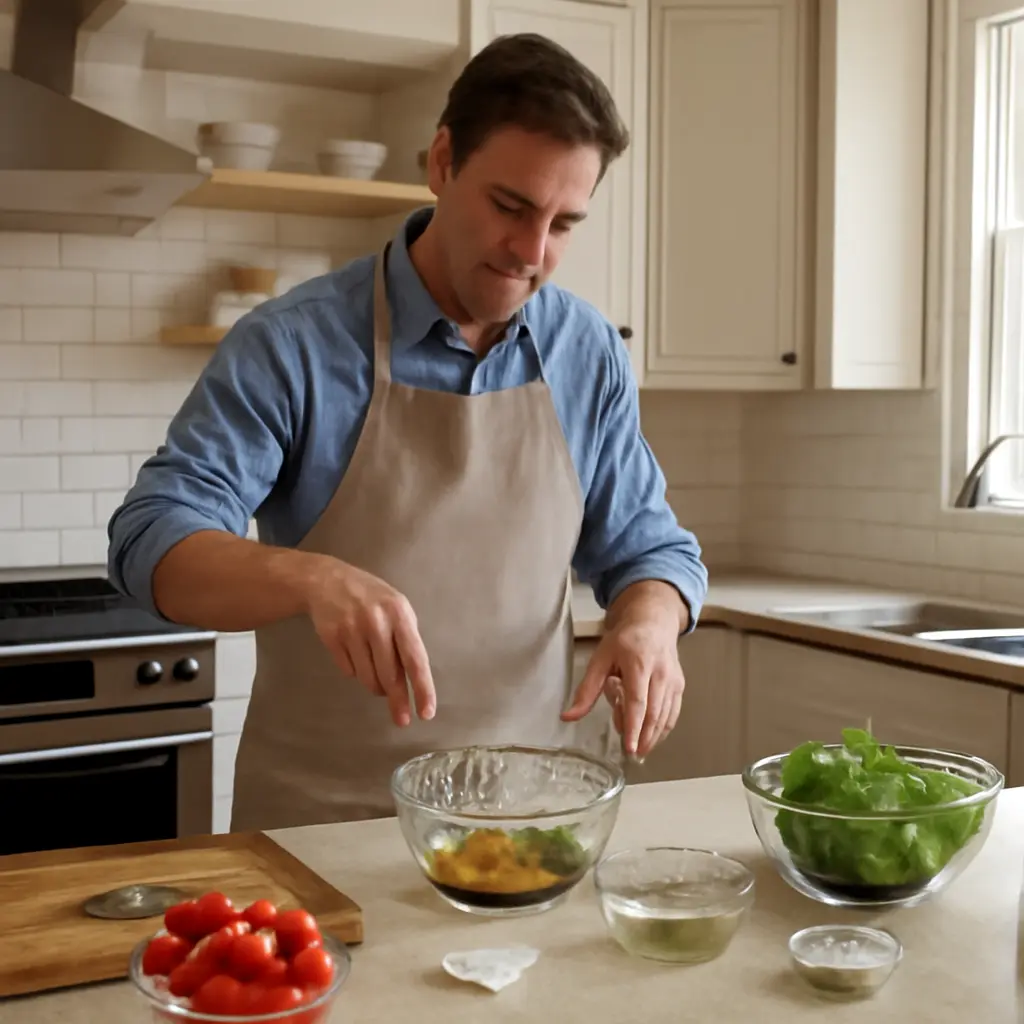
Dressings are sauces built to coat food, balance flavor, and often combine ingredients that naturally separate, such as oil and vinegar. Most dressing mishaps are avoidable: add oil too quickly, use ingredients at mismatched temperatures, overdo an acid or thickener, or fail to taste and adjust. The result can be greasy, split, too sharp, or bland. Understanding emulsification, ingredient ratios, seasoning, and storage helps you make more reliable vinaigrettes and creamy dressings—and explains how to rescue them when they go wrong.
Emulsification defines how dressings hold together
An emulsion is a mixture of liquids that ordinarily do not stay blended, such as oil and water-based vinegar. In a vinaigrette, tiny droplets of oil disperse through the acidic liquid; whisking or blending breaks the oil into droplets, while mustard or egg yolk can help keep them dispersed. The Institute of Food Technologists describes emulsifiers as ingredients that help stabilize mixtures of otherwise immiscible substances. A homemade vinaigrette is often only temporarily emulsified, so some separation over time is normal—not necessarily a sign that it has spoiled.
The familiar three-parts-oil-to-one-part-vinegar ratio is a starting point, not a rule. The ideal balance varies with the acidity of the vinegar, the sharpness of other ingredients, and the food being dressed. Common types include temporary oil-and-vinegar vinaigrettes, mustard-stabilized vinaigrettes, and thicker egg- or dairy-based dressings. Each can fail in a different way, but many problems start with the same mistake: rushing the mixing process.
Adding oil too quickly
A vinaigrette splits when oil droplets join back together instead of remaining evenly distributed. Pouring oil in all at once can overwhelm the whisking action, particularly when the acidic base contains no stabilizer. Whisk the vinegar, salt, and other flavorings first, then add oil in a thin, steady stream while whisking continuously. A blender can make a tighter, longer-lasting emulsion, though it may also produce a thicker dressing than intended.
If the mixture separates, start with a teaspoon of mustard or water in a clean bowl and slowly whisk the broken dressing into it. This gives the oil another chance to disperse. For a simple vinaigrette without mustard, vigorous whisking or shaking in a tightly sealed jar may be enough to recombine it temporarily.
Using ingredients at mismatched temperatures
Temperature affects how easily ingredients blend. Very cold oil can become cloudy or thicken, while chilled ingredients may make a creamy dressing harder to mix smoothly. For a more predictable result, let refrigerated ingredients sit briefly until they are cool rather than icy, and avoid adding hot ingredients directly to a dressing that contains egg or dairy. Temperature alone does not guarantee a stable emulsion, but keeping ingredients in a similar range can make mixing easier.
Flavor balance determines whether dressing tastes complete
A well-made dressing balances acidity, fat, salt, and sometimes sweetness, bitterness, or savory flavors. Acid supplies brightness; oil rounds it out and carries aroma; salt makes flavors more perceptible. Because vinegars, citrus juices, oils, and mustards vary in intensity, measuring a recipe is only the beginning. Taste the dressing with the food it will accompany: a dressing that seems strong on a spoon may taste balanced when spread across greens or vegetables.
Using too much acid or oil
Too much vinegar or citrus can make a dressing harsh, while too much oil can leave it heavy and dull. Start with less acid than you think you need, add oil gradually, and taste before adding more. If the dressing is too sharp, dilute it with oil or a small amount of water, then reassess the salt. If it is greasy or muted, add acid a little at a time. A small amount of honey or sugar can soften excessive sharpness, but sweetness should not conceal an unbalanced ratio.
Adding salt at the wrong stage
Salt dissolves more readily in water-based ingredients than in oil. Dissolve it in the vinegar, lemon juice, or another aqueous component before whisking in oil; otherwise, the dressing may taste unevenly seasoned. Taste again after emulsifying, since fat can soften the perception of acidity and salt. Remember that salty additions such as cheese, capers, olives, soy sauce, or anchovies can change the final seasoning.
Forgetting that ingredients vary
A tablespoon of mild rice vinegar does not taste like a tablespoon of sharp red-wine vinegar, and extra-virgin olive oils differ in bitterness and intensity. Mustard, garlic, herbs, and citrus also vary. Adjust by tasting rather than assuming every ingredient behaves identically. A practical approach is to mix the base, add strong flavorings in small amounts, and make the final adjustments only after the dressing has been combined.
Texture and technique prevent common dressing failures
Texture depends on more than the oil-to-acid ratio. Particle size, mixing method, and the amount of water in ingredients such as yogurt, tahini, or grated cheese all affect whether a dressing pours, clings, or turns pasty. Choosing the right tool and adding ingredients in a sensible order helps preserve the texture you want.
Overworking or underworking the mixture
Under-whisking can leave oil and vinegar in distinct layers; over-blending can make some dressings excessively thick or aerated. Whisk a basic vinaigrette until it looks temporarily uniform, then stop. Use a blender for a more persistent emulsion or to smooth ingredients such as herbs and garlic, but add oil gradually and check the consistency as you go. For chunky dressings, fold in delicate ingredients after blending the base.
Adding thickeners without enough liquid
Mustard, tahini, nut butter, grated cheese, and yogurt can thicken dressings quickly. Adding too much at once may create a paste that is difficult to loosen or a flavor that overwhelms the rest. Begin with a modest quantity, whisk it into the acidic ingredients, and thin the mixture gradually with water, vinegar, or oil according to the flavor and texture you need. When using tahini, its initial thickening as it meets water or lemon juice is normal; continued whisking and gradual addition of liquid usually smooth it out.
Using dried herbs as if they were fresh
Dried herbs are more concentrated by volume than fresh herbs, and their flavor often needs time to bloom. Using the same measured amount of dried herbs as fresh can make a dressing dusty or overpowering. Add dried herbs sparingly and let the dressing stand briefly before tasting again. Add fresh herbs near the end, especially delicate leaves, to preserve their aroma and color.
Safe storage matters as much as flavor
Storage mistakes can affect both quality and safety. Dressings made with fresh garlic, herbs, dairy, or eggs are more perishable than a basic oil-and-vinegar mixture. The U.S. Department of Agriculture advises keeping perishable foods at 40°F (4°C) or below and not leaving them at room temperature for more than two hours—or more than one hour when the temperature is above 90°F (32°C). Use clean utensils, refrigerate perishable homemade dressings promptly, and follow the shortest applicable guidance for their ingredients.
Assuming vinegar makes every dressing shelf-stable
Acidic ingredients do not automatically make a homemade dressing safe to store at room temperature. The finished mixture’s acidity, recipe, handling, and ingredients all matter, and home cooks generally do not measure or validate those conditions. Refrigerate homemade dressings containing fresh ingredients, eggs, or dairy, and do not rely on smell or appearance alone to establish safety. Commercial products may have different storage instructions because they are made and tested under controlled conditions.
Keeping dressing too long or contaminating it
A dressing can pick up food particles and microbes when a used spoon or salad-covered utensil goes back into its container. Pour out only what you need, use a clean spoon, and label the container with its preparation date. Discard dressings that have been mishandled or stored beyond reliable guidance for their ingredients. Separation by itself is common in vinaigrettes; it is the storage history and ingredients—not separation alone—that should guide safety decisions.
A reliable method makes dressings easier to rescue
Use this sequence to avoid the most common problems: dissolve salt in the acid, whisk in mustard or other stabilizers if using them, stream in oil slowly, then taste and adjust. For a thin dressing that needs more body, add a small amount of mustard, yogurt, or tahini. For a dressing that is too thick, loosen it gradually with water or acid. If it is overly salty, dilute it with unsalted ingredients; if it tastes flat, add a little salt or acid rather than more oil.
For example, if a lemon vinaigrette tastes too sharp, whisk in oil a teaspoon at a time and taste it on a leaf of the salad green. If a tahini dressing turns stiff, add cold water a little at a time while whisking until it becomes pourable. These small, measured adjustments are more dependable than trying to correct a mistake with a large splash of another ingredient.
A simple visual guide can help troubleshoot a batch: a shiny pool of oil points to separation; a thick paste suggests too much thickener or too little liquid; a watery, harsh mixture may need more oil or a stabilizer; and a dull flavor may need salt or acid. Treat these clues as starting points, then taste before making the next adjustment.
Conclusion: Better technique makes better dressings
Dressings are easier to master when you understand emulsification, balance flavor deliberately, manage texture, and store perishable ingredients safely. Add oil gradually, dissolve salt in the acidic base, account for differences between ingredients, and correct problems in small steps. Try the method with a basic vinaigrette, then adapt it to creamy or herb-based versions. For food-safety advice, consult USDA guidance and follow the storage directions for the ingredients you use.
Sources: Institute of Food Technologists, Food Facts: Emulsifiers, https://www.ift.org/news-and-publications/food-technology-magazine/issues/2017/july/columns/food-facts-emulsifiers; U.S. Department of Agriculture, Food Safety and Inspection Service, Keep Food Safe! Food Safety Basics, https://www.fsis.usda.gov/food-safety/safe-food-handling-and-preparation/food-safety-basics/keep-food-safe-food-safety-basics; U.S. Food and Drug Administration, Food Code 2022, https://www.fda.gov/food/fda-food-code/food-code-2022