
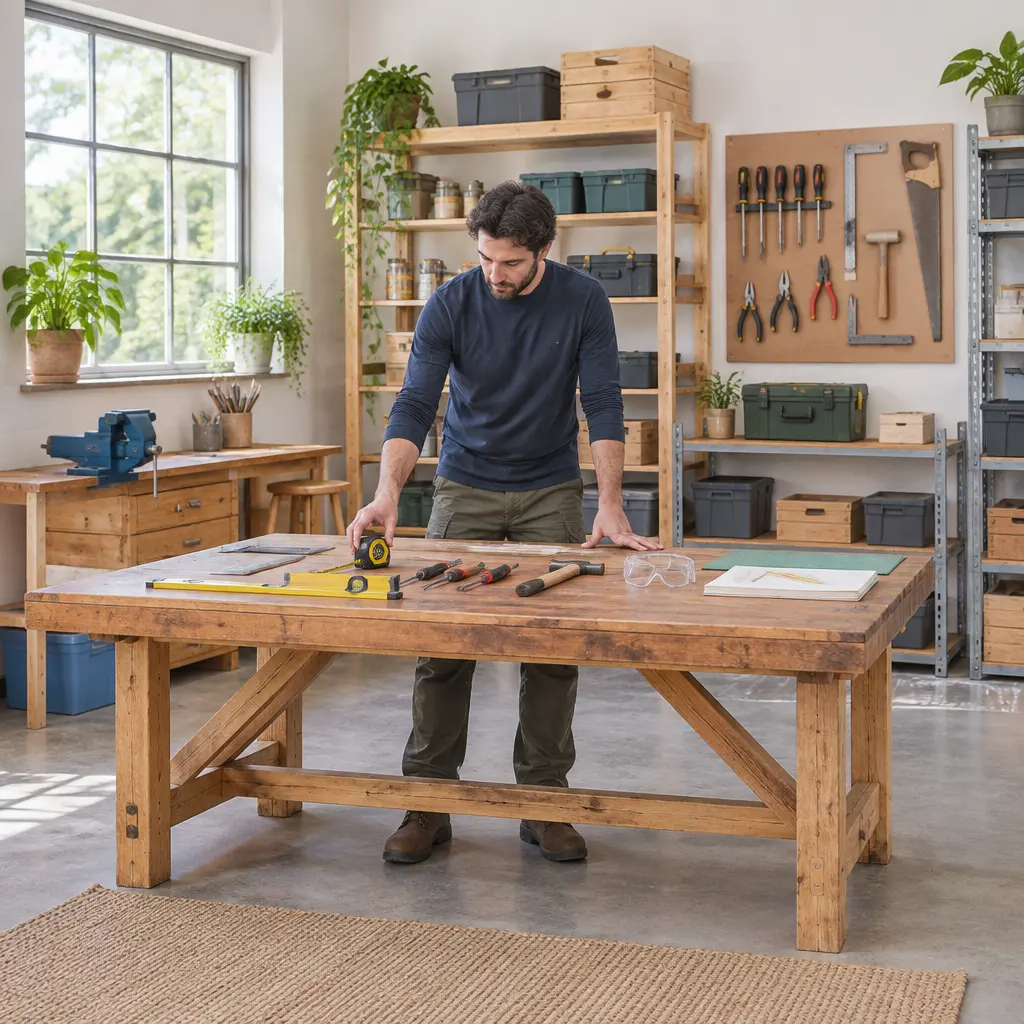
A beginner kit is a deliberately chosen set of tools and supplies that helps a new learner practice essential skills without unnecessary cost or complexity. For beginners, the strongest kit is not the biggest one: it combines reliable basics, supports safe and repeated practice, and leaves room to add specialized tools as ability grows. That approach reflects a broader learning principle: practice and feedback matter more than owning advanced equipment. The U.S. Department of Education’s review of learning research emphasizes the value of structured practice and feedback, while the Consumer Product Safety Commission advises consumers to consider hazards and follow product safety instructions. This guide explains how to define a useful beginner kit, select its core components, adapt it to a craft or technical skill, and progress without overspending.
Beginner Kit Selection and Skill Progression
Beginner kit selection is the process of choosing a small, fit-for-purpose group of tools that enables a learner to complete foundational tasks and build competence through practice. A good kit links each item to a skill: measuring tools support accuracy, basic hand tools support control, and safety equipment makes practice more responsible. There is no universal kit, because a sewing learner, woodworker, watercolor painter, and electronics hobbyist face different tasks and risks. The practical goal is to cover common beginner exercises, verify that tools are safe and usable, and add equipment only when a new skill genuinely requires it.
Core Toolkit Design for Beginner Skill Progression
A core toolkit is the smallest useful collection of tools and materials that lets a learner practice a skill’s essential operations. This definition is a practical synthesis rather than a standardized technical definition: the National Institute of Standards and Technology describes measurement in terms of establishing reliable, traceable results, while the Occupational Safety and Health Administration frames workplace safety around identifying and controlling hazards. Applied to beginner kits, those ideas mean selecting tools that perform predictably and matching them to the risks and demands of the activity.
A toolkit can be divided into several useful types: a foundational kit for recurring basic tasks, a safety kit for personal protection and safe handling, a consumables kit for materials that are used up, and an expansion kit for tools introduced at later skill levels. These categories overlap, but separating them helps beginners distinguish what is essential now from what is optional later. A learner can then move from choosing a kit to evaluating its individual components.
Foundational tools: cover repeatable beginner tasks
Foundational tools are the basic instruments used repeatedly to perform a skill’s core actions. Examples include a measuring tape and square for introductory woodworking, fabric scissors and a seam gauge for sewing, or a small set of brushes and a mixing surface for painting. Choose tools by task coverage rather than by the number of pieces in a package: an item earns its place if it supports a common exercise, improves control, or makes results easier to assess.
For example, a new cook can learn knife control, weighing, and temperature awareness with a chef’s knife, cutting board, kitchen scale, and suitable thermometer; a large collection of specialty appliances is not required for those fundamentals. The U.S. Department of Agriculture recommends using a food thermometer to verify safe internal cooking temperatures, illustrating how one appropriately chosen tool can support both skill development and safety. The best foundational kit therefore includes fewer, dependable items rather than many tools that duplicate one another.
Safety equipment: make safe practice part of the skill
Safety equipment reduces exposure to hazards associated with a task. Depending on the activity, it may include eye protection, a dust mask or respirator selected for the hazard, heat-resistant gloves, ventilation, a first-aid kit, or protective guards. Safety is not an optional upgrade: it is part of competent practice, alongside learning how to handle, inspect, and store tools.
OSHA’s hierarchy of controls prioritizes eliminating hazards and using engineering or administrative controls before relying on personal protective equipment alone. Beginners can apply this principle by choosing a safer work area, securing materials, using guards and ventilation, and then wearing appropriate protective equipment. Requirements differ by task and product, so consult manufacturer instructions and relevant safety guidance instead of assuming that one generic pair of gloves or mask is suitable for every activity.
Consumables and setup: plan for materials, not just tools
Consumables are supplies used up or changed during practice, such as paper, thread, fasteners, paint, solder, or practice lumber. A beginner kit that contains tools but too little material for repeated attempts can interrupt learning. Estimate the supplies needed for several short exercises, and select inexpensive practice materials where they are appropriate and safe.
Setup items—such as a stable work surface, storage containers, task lighting, and a way to clean up—also affect whether practice is consistent. The National Institute for Occupational Safety and Health highlights the importance of considering work conditions and exposure when managing hazards. In a home workshop, that can mean controlling dust and keeping walkways clear; in a painting area, it may mean protecting the work surface and ensuring adequate ventilation for the materials in use.
Match Beginner Kits to the Skill and Learner
Once the toolkit’s basic categories are clear, selection should begin with the activity rather than with a popular product list. The same item can be essential in one discipline and irrelevant in another. A useful decision process identifies likely exercises, checks compatibility and safety, and weighs budget against how often each tool will be used.
Start with tasks and learning outcomes
A learning outcome is a specific capability the beginner should be able to demonstrate, such as making a straight cut, sewing a consistent seam, mixing a controlled color, or building a simple circuit. List three to five early exercises, then identify the tools each exercise requires. This task-first method prevents “feature creep,” where attractive but advanced equipment crowds out the basics.
For a beginner electronics kit, for example, early outcomes might include identifying components, following a simple circuit diagram, and measuring voltage safely. Those tasks point toward a suitable breadboard, basic components, and a multimeter, alongside careful attention to electrical limits and instructions. They do not automatically justify buying a soldering station or specialized test instruments before the learner has a reason to use them.
Balance quality, cost, and compatibility
A beginner tool should be reliable enough to produce clear feedback, but it need not be professional-grade. Very low-quality tools can frustrate practice when they are inaccurate, uncomfortable, or prone to failure; expensive tools can be poor value when the learner has not yet established a lasting interest. Check dimensions, power requirements, replacement-part availability, material compatibility, warranty terms, and whether the tool fits the learner’s age, strength, and workspace.
The U.S. Consumer Product Safety Commission advises consumers to follow product warnings and instructions and to take particular care when products are intended for children. That guidance is relevant to kit selection: check age recommendations, choking hazards, sharp edges, chemical labels, and required adult supervision. For electrical, chemical, or powered tools, verify that the kit’s components and accessories are designed to work together and are appropriate for the user’s setting.
Use a simple selection scorecard
A scorecard makes trade-offs visible before purchase. Rate each candidate tool for task necessity, safety, durability, ease of use, and total cost—including consumables and replacement parts. A basic high-low rating is enough; precise numerical scoring can create a false sense of certainty when the learner has little experience.
- Essential: required for a planned beginner exercise or safe operation.
- Useful: improves convenience or accuracy but has a workable substitute.
- Defer: serves an advanced technique or a task the learner has not chosen.
- Avoid: duplicates another item, lacks clear safety information, or is incompatible with the intended use.
This scorecard is especially helpful when comparing a preassembled kit with a custom list. Preassembled kits may offer convenience and compatibility, while custom kits make it easier to select specific quality levels and avoid redundant pieces. In either case, judge the contents against real tasks rather than the advertised piece count.
Progress from Basic Tools to Advanced Skills
A beginner kit should support progression, not lock the learner into beginner work. Skill progression means moving from simple, closely guided tasks toward more complex work with greater independence and precision. The appropriate time to expand the kit is when the learner encounters a repeated task that the current tools cannot perform well—not simply when a more advanced product becomes available.
Practice, feedback, and deliberate upgrades
Practice improves a skill most effectively when the learner has a clear goal, receives useful feedback, and adjusts the next attempt. The National Academies’ review of how people learn describes the importance of prior knowledge, feedback, and opportunities to apply learning. A simple practice log can record the exercise, result, error, and next adjustment; this makes it easier to see whether a new tool is genuinely needed.
A staged upgrade path might begin with measuring and hand control, then add tools for greater precision, and finally introduce equipment for specialized techniques. In sewing, that could mean progressing from hand stitching and basic machine operation to fitting tools or a specialized presser foot when a project requires them. In woodworking, it could mean mastering layout and hand tools before considering powered equipment, with appropriate training and safety controls before use.
Maintain, store, and reassess the kit
Maintenance preserves tool performance and helps prevent avoidable failures. Clean tools after use, keep cutting edges protected, store materials according to their labels, and inspect cords, guards, handles, and measuring surfaces before practice. Replace damaged tools rather than attempting improvised repairs that may create new hazards.
Reassess the kit after completing a few projects. Keep tools that are regularly used, replace items that limit accuracy or safety, and remove unused supplies that create clutter. A small record of tool use and project outcomes can provide practical evidence for the next purchase and help the learner avoid buying equipment that does not support a current learning goal.
Conclusion: Build a Kit That Grows with the Learner
Effective beginner kit selection starts with a clear definition of the core toolkit: a focused set of foundational tools, safety equipment, consumables, and setup essentials for real beginner tasks. Matching those items to learning outcomes, checking compatibility and hazards, and balancing cost with dependable performance creates a stronger starting point than buying the largest package. As the learner practices, receives feedback, and identifies recurring limitations, the kit can expand in deliberate stages.
Choose one skill, write down three starter exercises, and identify only the tools needed to complete them safely. Then practice, maintain the kit, and upgrade when experience—not advertising—shows that a new capability is needed. For further reading, consult guidance from OSHA, NIOSH, the Consumer Product Safety Commission, and discipline-specific teaching or safety organizations.
Sources: U.S. Department of Education, Organizing Instruction and Study to Improve Student Learning, https://ies.ed.gov/ncee/wwc/PracticeGuide/1; National Academies of Sciences, Engineering, and Medicine, How People Learn II: Learners, Contexts, and Cultures, https://nap.nationalacademies.org/catalog/24783/how-people-learn-ii-learners-contexts-and-cultures; National Institute of Standards and Technology, Metrological Traceability, https://www.nist.gov/metrology/metrological-traceability; Occupational Safety and Health Administration, Recommended Practices for Safety and Health Programs, https://www.osha.gov/safety-management; Occupational Safety and Health Administration, Personal Protective Equipment, https://www.osha.gov/personal-protective-equipment; National Institute for Occupational Safety and Health, Hierarchy of Controls, https://www.cdc.gov/niosh/hierarchy-of-controls/about/index.html; U.S. Consumer Product Safety Commission, Safety Education, https://www.cpsc.gov/Safety-Education; U.S. Department of Agriculture, Safe Minimum Internal Temperature Chart, https://www.foodsafety.gov/food-safety-charts/safe-minimum-internal-temperatures.