
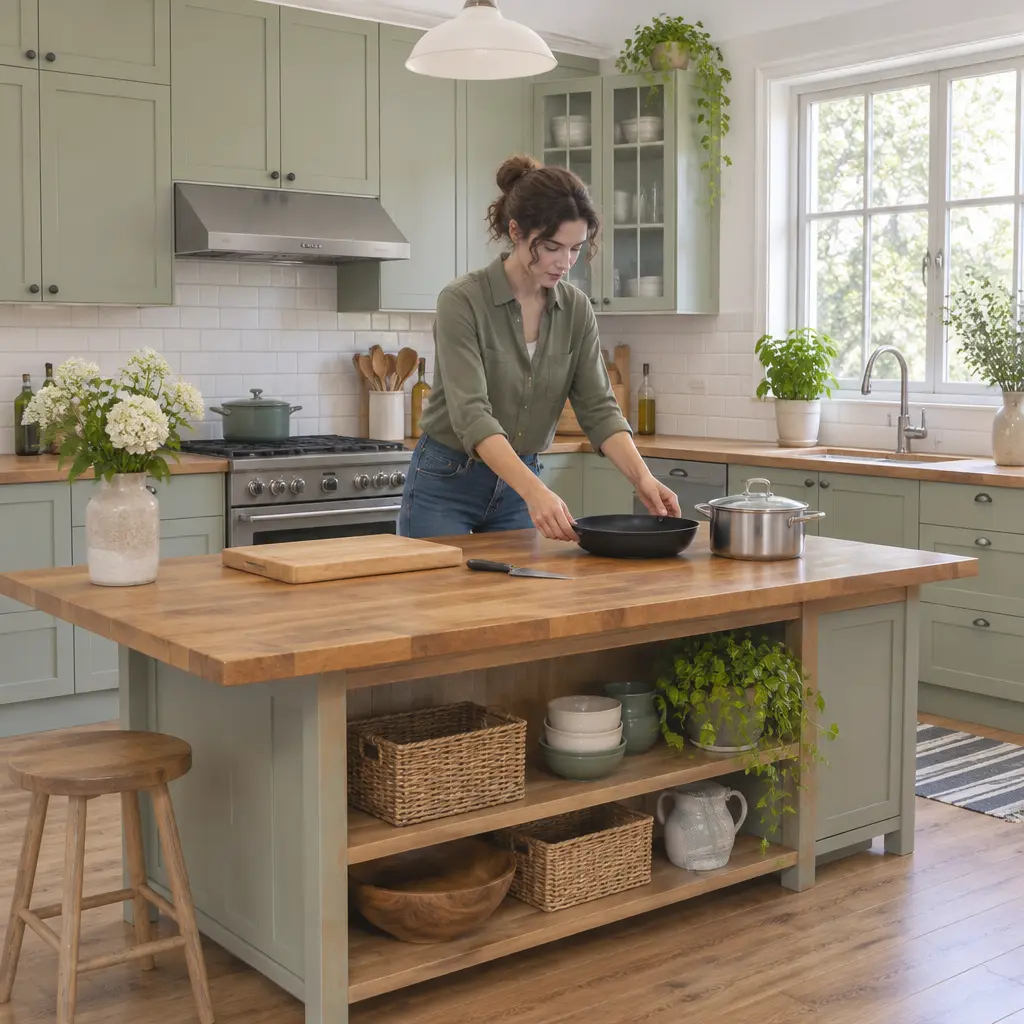
A kitchen toolkit is a small, practical collection of equipment for preparing, cooking, and serving food. Building one without overspending means starting with versatile essentials, choosing durable items suited to your cooking habits, and adding specialized tools only when a real need arises. That approach matters in a country where the U.S. Bureau of Labor Statistics reports that the average consumer unit spent $3,945 on food at home in 2023: equipment that supports regular home cooking can be useful, but buying rarely used gadgets can tie up money and storage space. Below, we define a budget-conscious toolkit, identify core tools, explain how to evaluate purchases, and offer a staged plan for filling gaps.
A Budget-Conscious Kitchen Toolkit Prioritizes Versatility
A budget-conscious kitchen toolkit is a deliberately limited set of tools that safely handles the cooking tasks a household does most often. It is not a fixed shopping list: the right kit depends on diet, kitchen space, cooking frequency, and which equipment is already available. The U.S. Department of Agriculture’s MyPlate guidance encourages preparing meals at home as one way to support healthy eating habits; a useful toolkit can make that routine easier without requiring a fully outfitted kitchen.
The key characteristics are broad usefulness, safe handling, easy cleaning, and compatibility with the user’s cooktop and storage. A sturdy knife can cover many cutting tasks; a lidded pot can boil grains, simmer soup, and cook pasta. By contrast, a single-purpose gadget earns its place only if it solves a recurring problem. This distinction leads naturally from deciding what the kit should do to choosing the few tools that accomplish those jobs.
Start with cooking tasks, not a preset bundle
A task-based toolkit is organized around everyday actions—chopping, mixing, sautéing, boiling, baking, and storing—rather than a large set sold as a complete collection. Before shopping, list several meals you actually make or plan to make. Note which tools those meals require and check what is already in your cupboards. This simple audit helps prevent duplicate purchases and keeps the list aligned with real habits.
For example, someone who mostly cooks soups, beans, and vegetables may benefit more from a dependable pot, a cutting board, and a sharp knife than from a full baking set. A person who frequently bakes will have different priorities. The USDA’s MyPlate resources provide meal-planning guidance, but equipment choices should reflect the recipes and techniques a household will use in practice.
Use versatility as a value test
Versatility means that one tool performs several useful jobs without making those jobs unsafe or inconvenient. A rimmed sheet pan, for instance, can roast vegetables, bake cookies, and catch drips. A heat-safe turner can stir and flip food. When comparing items, consider cost per likely use rather than price alone: a less expensive tool that breaks quickly may be a poor value, while a moderately priced tool used several times a week may be worthwhile.
The bridge from versatility to value is durability. The Environmental Protection Agency’s sustainable materials guidance emphasizes reducing waste through source reduction and more durable consumption choices. Applied to kitchen equipment, that means avoiding unnecessary purchases and looking after the tools already owned—while still replacing items that are damaged or unsafe.
Core Kitchen Tools Cover the Most Common Jobs
Core tools are the dependable basics that let a cook prepare a range of ordinary meals. There is no official universal inventory, but a compact starting set generally includes a cutting surface, a knife, a few cooking vessels, basic utensils, and a way to measure ingredients when recipes require precision. The categories below are hyponyms of the broader kitchen toolkit: each addresses a distinct stage of food preparation.
A knife and cutting board handle preparation
A chef’s knife or another comfortable all-purpose knife, paired with a stable cutting board, covers much routine chopping and slicing. The best knife is one the user can control securely and maintain; a large or expensive knife is not automatically better. A small paring knife can be added if frequent peeling or detailed trimming makes it useful, but many beginners can start with one well-maintained general-purpose knife.
Food safety is part of this category. The USDA Food Safety and Inspection Service advises using separate cutting boards for raw meat, poultry, and seafood and for ready-to-eat foods, or thoroughly washing and sanitizing boards between tasks. A household can meet that need with clearly designated boards rather than purchasing a large matching set.
One or two pans and a lidded pot cover stovetop cooking
A frying pan or skillet is suited to sautéing, browning, and cooking eggs, while a medium lidded pot can handle pasta, grains, vegetables, and soup. A second pan is justified when cooking volume or recipe variety demands it, not simply because a boxed set includes one. Check that the cookware works with the stove: induction cooktops, for example, require cookware with a magnetic base.
Material and care requirements matter as much as the sticker price. Stainless steel, cast iron, and nonstick cookware have different handling and maintenance needs. Follow the manufacturer’s care instructions, avoid using damaged cookware, and select a size that fits both the household’s typical portions and the available storage.
A few utensils support cooking and serving
A heat-safe spatula or turner, a large spoon, and tongs can manage many common stovetop tasks. Add a whisk if sauces, eggs, or batters appear often in your cooking. Utensil material should suit the cookware: tools that scratch a coated pan can shorten its useful life, while heat-resistant materials are important around hot surfaces.
Buying utensils individually helps match the kit to actual use and avoids paying for duplicates. For food safety, the FoodSafety.gov guidance recommends keeping foods out of the temperature “danger zone” of 40°F to 140°F, where bacteria can multiply rapidly. A basic instant-read food thermometer may therefore be a more useful purchase than a decorative or single-use utensil, especially for cooking meat, poultry, and leftovers safely.
Measuring and baking tools depend on recipes
Measuring cups and spoons are useful for recipes where proportions matter. A mixing bowl can serve for combining ingredients, washing produce, and serving. For frequent baking, a scale and appropriate bakeware can improve consistency; for occasional baking, borrow or buy only the specific pan a recipe requires. This staged approach keeps baking equipment from crowding a kitchen before it is needed.
The U.S. Food and Drug Administration explains that nutrition labels use standardized serving sizes and measurements, but recipe measurements and label serving sizes serve different purposes. For ordinary cooking, follow the recipe’s specified measurement method rather than assuming all cups or portions are interchangeable.
Smart Purchasing Reduces the Cost of a Kitchen Toolkit
Once the core jobs are covered, purchasing decisions determine whether the toolkit remains economical. Compare function, condition, compatibility, and replacement needs—not just the advertised discount. Consumer Reports’ cookware testing and product reviews illustrate why performance and ease of cleaning are useful comparison points, though shoppers should check current models and prices before buying.
Buy gradually and set a spending ceiling
A staged purchase plan separates immediate needs from optional upgrades. Start with the tools needed to prepare a few regular meals, then add equipment only after repeated experience reveals a gap. Set a total budget and a per-item limit in advance; these guardrails make it easier to resist bundles that include tools with no clear role.
- Audit existing equipment and remove unsafe or unusable items from the plan.
- Identify the meals and cooking methods you use most often.
- Buy the minimum safe, functional set needed for those tasks.
- Track what you borrow, improvise, or repeatedly struggle to do.
- Purchase an additional tool only when that repeated need justifies it.
Compare total value, not just the shelf price
Total value includes expected lifespan, maintenance, replacement parts, and whether the tool works with existing equipment. Check the handle, joints, coating, and warranty where relevant. For knives, consider whether sharpening is available and affordable. For cookware, verify stove compatibility and care requirements. A low-cost item that cannot meet the task—or that must be replaced soon—may not be the least expensive choice over time.
The Federal Trade Commission advises consumers to evaluate product claims and compare terms rather than relying on promotional language alone. Apply the same caution to “professional,” “premium,” or “complete” kitchen sets: assess the actual contents and whether each piece is useful to your household.
Consider secondhand, borrowing, and repair
Secondhand shops, community exchanges, and borrowing are practical options for tools that can be inspected and cleaned safely. They are especially useful for testing occasional-use items such as specialty pans. Inspect used cookware for loose handles, sharp damage, deep corrosion, or peeling nonstick surfaces; do not use items whose safety is uncertain. Knives should be structurally sound and sharpened appropriately before regular use.
Repair and maintenance can extend the life of a toolkit. Sharpening a knife, replacing a worn utensil, and cleaning cookware according to its care instructions may be more economical than replacing an entire set. This also reflects the EPA’s waste-prevention principle: avoid buying more material than the task requires.
A Practical Starter Kit Can Grow with Your Cooking
A realistic starter kit is a flexible baseline, not a mandatory checklist. One household might begin with an all-purpose knife and board, a skillet, a lidded pot, a spoon, a turner, a mixing bowl, and basic measuring tools. Another might need a baking sheet or food thermometer earlier because of its preferred recipes. These examples show how the core categories can be adapted while preserving the same budget principle: buy for frequent, meaningful use.
A simple visual planning aid is a two-column chart labeled “Already own” and “Needed for regular meals.” A second chart can rank potential purchases by frequency of use, safety importance, and cost. This makes duplicates and low-priority gadgets visible before money is spent.
For a real-world example, imagine a renter with limited cupboards who cooks rice bowls, pasta, and vegetables. The renter could begin with a board and knife, one skillet, one medium pot, a spoon, and a turner. After several weeks, if baking becomes a regular activity, a sheet pan can be added. If the renter rarely bakes, borrowing a pan for an occasional recipe avoids both a purchase and storage burden.
Conclusion: Build a Kitchen Toolkit Around Use
A kitchen toolkit without overspending starts with a clear definition of need: tools should support the meals and techniques a household actually uses. Prioritize versatile preparation, cooking, and measuring essentials; check safety, durability, compatibility, and maintenance; and buy in stages instead of defaulting to a large bundle. A short inventory and a spending ceiling can help turn those principles into a practical plan.
The broader benefit is a kitchen that is easier to use, less cluttered, and less likely to generate unnecessary waste. Review your cupboards, choose the next tool that solves a recurring problem, and consult food-safety guidance before using or replacing equipment.
Sources: U.S. Bureau of Labor Statistics, Consumer Expenditures—2023, https://www.bls.gov/news.release/cesan.nr0.htm; USDA MyPlate, Start Simple with MyPlate, https://www.myplate.gov/eat-healthy/what-is-myplate; USDA Food Safety and Inspection Service, Cutting Boards, https://www.fsis.usda.gov/food-safety/safe-food-handling-and-preparation/food-safety-basics/cutting-boards; FoodSafety.gov, Safe Minimum Internal Temperature Chart, https://www.foodsafety.gov/food-safety-charts/safe-minimum-internal-temperatures; U.S. Environmental Protection Agency, Sustainable Materials Management: Non-Hazardous Materials and Waste Management Hierarchy, https://www.epa.gov/smm/sustainable-materials-management-non-hazardous-materials-and-waste-management-hierarchy; U.S. Food and Drug Administration, The Nutrition Facts Label, https://www.fda.gov/food/nutrition-facts-label/how-understand-and-use-nutrition-facts-label; Consumer Reports, Cookware Buying Guide, https://www.consumerreports.org/home-garden/cookware/buying-guide/; Federal Trade Commission, Shopping Online, https://consumer.ftc.gov/consumer-alerts/2020/04/shopping-online.


