
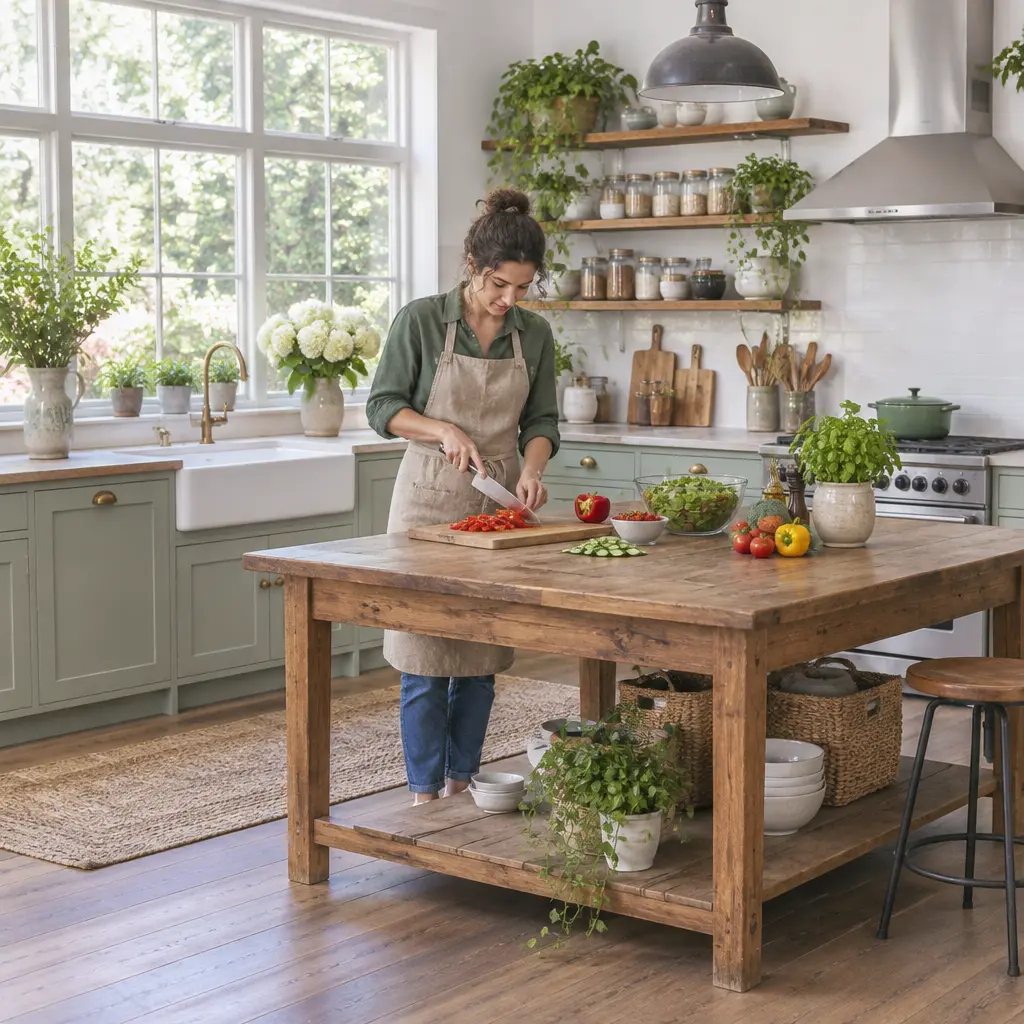
A kitchen utensil is a hand-held tool used to prepare, cook, serve, or measure food. For a new cook, the most useful first purchases are a chef’s knife, cutting board, measuring tools, mixing bowl, colander, peeler, wooden spoon, heat-safe spatula, tongs, and instant-read thermometer. Together, these ten basics support everyday tasks—from chopping vegetables and stirring a sauce to checking whether meat has reached a safe temperature—without requiring a crowded or expensive kitchen. The U.S. Department of Agriculture recommends using a food thermometer to verify safe internal temperatures, while practical knife and food-safety guidance helps explain why a few well-chosen tools matter more than a large collection.
Choosing the First Ten Kitchen Utensils by Essential Cooking Function
There is no official universal ranking of beginner utensils. A useful starter set is best defined by the range of common jobs it can handle: cutting, measuring, mixing, draining, peeling, stirring, turning, gripping, and checking doneness. This function-based approach also avoids buying several tools that do essentially the same thing. The ten picks below are hand tools; pots, pans, and appliances are separate cookware and equipment categories.
1. Chef’s knife: the main cutting tool
A chef’s knife is a general-purpose kitchen knife used for slicing, chopping, and mincing. A blade around 8 inches long suits many home cooks, though comfort and control matter more than a particular size. Look for a secure handle and a blade that feels balanced in your hand. Learn to keep the knife sharp and use a stable cutting board; a dull or poorly controlled blade can make cutting less predictable. A paring knife can be a useful later addition, but it is not a substitute for a comfortable everyday knife.
2. Cutting board: a stable, washable work surface
A cutting board is a flat surface that protects the counter and provides a safer place to cut. Choose one that does not slide easily and is large enough to hold ingredients without crowding. The USDA advises using separate cutting boards for raw meat, poultry, and seafood and for ready-to-eat foods such as produce and bread, or washing boards thoroughly between tasks. A second board is therefore a practical early upgrade; a damp towel beneath a board can help keep it steady.
3. Measuring cups and spoons: tools for repeatable quantities
Measuring cups and spoons quantify ingredients so a recipe can be followed consistently. A set of measuring spoons and dry-ingredient cups covers many routine recipes; a liquid measuring cup with a spout makes it easier to read and pour liquids. Measuring is especially important in baking, where ingredient proportions can strongly affect results. For dry ingredients, follow the recipe’s method—such as spooning flour into a cup and leveling it—rather than packing it unless instructed.
4. Mixing bowl: a container for combining ingredients
A mixing bowl holds ingredients while they are stirred, whisked, or tossed. One medium-to-large bowl is a sensible first choice; a nesting set can save storage space and provide sizes for different tasks. Use it to mix pancake batter, dress a salad, combine meatballs, or hold chopped ingredients. Stainless steel and glass are common options: choose a material that suits your budget, cleaning habits, and intended use.
With the basic cutting, measuring, and mixing tools in place, the next group helps manage ingredients as they move from preparation to cooking.
5. Colander: a tool for draining and rinsing
A colander is a perforated bowl used to drain liquid while retaining solid food. It is useful for draining pasta, rinsing beans, or washing vegetables. Choose a size that fits your sink and can hold a typical batch of pasta. Small holes help retain smaller ingredients, while sturdy handles make lifting and pouring easier. A fine-mesh strainer is a helpful later purchase for rinsing grains or straining sauces, but a colander handles many basic draining jobs.
6. Vegetable peeler: a controlled way to remove thin skins
A vegetable peeler removes thin outer layers from produce such as carrots, potatoes, and apples. A comfortable handle and a sharp, smoothly moving blade matter more than extra features. Use light pressure and peel away from your hand, keeping fingers clear of the blade. A peeler can also make thin ribbons of vegetables for salads or garnishes, so it earns its place through more than one simple task.
7. Wooden spoon: a sturdy everyday stirrer
A wooden spoon is a solid stirring utensil suited to mixing sauces, soups, and batters. Its long handle helps keep hands away from hot food, and the broad head can scrape around the sides of a bowl or pot. Wood is generally gentle on cookware surfaces, but it should be washed and dried according to its care instructions rather than left soaking. A silicone spoon is a useful alternative when flexibility or easier cleanup is a priority.
8. Heat-safe spatula: a flexible tool for scraping and folding
A heat-safe spatula—often made of silicone—scrapes mixtures from bowls and pans, folds delicate ingredients, and stirs food during cooking. Its flexible edge reaches into corners that a rigid spoon may miss. Check the manufacturer’s heat rating before using it in a hot pan, and replace it if the head becomes damaged or separates from the handle. A thin, turner-style spatula for flipping eggs or pancakes is a distinct tool that can be added later if needed.
9. Tongs: a gripping and turning tool
Kitchen tongs grip, lift, and turn food without requiring direct hand contact. They are handy for turning vegetables in a pan, serving pasta, and moving cooked food. Choose a pair that opens and closes smoothly and has tips suited to your cookware. Treat tongs that have touched raw meat as contaminated: wash them before using them on cooked food, just as you would other utensils and preparation surfaces.
These handling tools make cooking easier, but appearance alone cannot reliably show whether many foods are safely cooked. A thermometer provides a more dependable check.
10. Instant-read food thermometer: a check on internal temperature
An instant-read food thermometer measures the internal temperature of food and displays a result quickly. It helps a cook avoid relying only on color, cooking time, or guesswork. The USDA lists safe minimum internal temperatures including 165°F (74°C) for poultry, 160°F (71°C) for ground meats, and 145°F (63°C) for whole cuts of beef, pork, lamb, and veal followed by a three-minute rest. Insert the probe into the thickest part without touching bone, and clean it between uses. Temperature guidance varies by food, so consult the USDA chart for the specific item.
How to Buy and Care for a Beginner’s Kitchen Utensil Set
Prioritize comfort, safety, and everyday usefulness
A beginner’s set is a collection of tools selected to cover frequent cooking tasks, not a fixed package that every cook must own. Before buying, consider the recipes you make most, available storage, and how each item feels in use. A comfortable knife, stable board, clearly readable measures, and a thermometer are more valuable than specialty gadgets that rarely leave a drawer. If shopping on a budget, buy the core items first and add tools when a recipe or routine reveals a genuine need.
Keep tools clean and prevent cross-contamination
Food-contact tools need careful cleaning, especially after handling raw animal products. The USDA’s food-safety guidance emphasizes keeping raw foods separate from ready-to-eat foods and washing hands, utensils, and surfaces after contact with raw meat, poultry, or seafood. Use clean utensils for cooked food, follow care directions for wood and knife blades, and let tools dry fully before storage. These habits protect both food quality and the people eating it.
A practical first-meal example
To prepare a simple vegetable-and-chicken meal, use the cutting board and chef’s knife to chop produce, measuring tools to portion seasoning, and a mixing bowl to combine ingredients. A peeler prepares carrots; a wooden spoon stirs a sauce; and tongs turn the food during cooking. Use the thermometer to check the chicken’s internal temperature against USDA guidance, then use a clean colander to rinse or drain ingredients as needed. This example shows how the ten tools work as a compact system rather than isolated purchases.
Conclusion: Build a Kitchen Around Useful, Reliable Tools
The first ten kitchen utensils for a new cook are a chef’s knife, cutting board, measuring cups and spoons, mixing bowl, colander, vegetable peeler, wooden spoon, heat-safe spatula, tongs, and instant-read food thermometer. Each serves a distinct everyday function, from preparation and measurement to handling and food-safety checks. Start with the tools you will use regularly, choose versions that are comfortable and easy to clean, and add specialty items only as your cooking grows. For further guidance, review the USDA’s food-safety recommendations and practice using each tool carefully.
Sources: U.S. Department of Agriculture, Food Safety and Inspection Service, Safe Minimum Internal Temperature Chart, https://www.fsis.usda.gov/food-safety/safe-food-handling-and-preparation/food-safety-basics/safe-temperature-chart; U.S. Department of Agriculture, Food Safety and Inspection Service, Cutting Boards and Food Safety, https://www.fsis.usda.gov/food-safety/safe-food-handling-and-preparation/food-safety-basics/cutting-boards-and-food-safety; U.S. Department of Agriculture, Food Safety and Inspection Service, Kitchen Companion: Your Safe Food Handbook, https://www.fsis.usda.gov/sites/default/files/media_file/2021-02/Kitchen_Companion.pdf


